Extraordinary New Discovery on the Giza Plateau May Rewrite the History of Ancient Egypt—and the Avocado
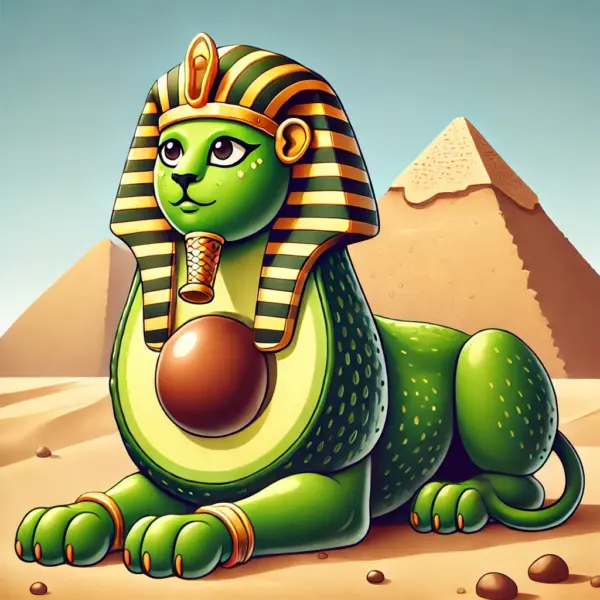
GIZA, EGYPT — Researchers investigating a mysterious formation near the Giza Plateau have announced what may be the most extraordinary archaeological discovery of 2026: evidence of a previously unknown second Sphinx.
Unlike the familiar limestone monument that has guarded the pyramids for thousands of years, this newly identified figure appears remarkably fresh, noticeably green and suspiciously rich in heart-healthy monounsaturated fats.
The monument has provisionally been named:
The Great SphynxCardo of Giza
Researchers first became suspicious after satellite scans revealed an unusual shape buried beneath centuries of desert sand.
At first, experts believed the green colour might have been caused by mineral deposits, vegetation or someone spilling guacamole across the satellite-monitoring equipment.
Closer examination, however, revealed the unmistakable outline of an enormous avocado with the body of a lion, the face of a serene cat and the ceremonial headdress of an Egyptian pharaoh.
Most remarkably, SphynxCardo possesses a magnificent polished brown seed positioned directly in the centre of her chest.
Archaeologists remain divided over whether the seed represents rebirth, fertility, eternal life or the ancient Egyptian hope that one day it might grow into an enormous avocado tree.
Hidden in Plain Sight
For thousands of years, travellers have visited Giza to see the pyramids and the original Great Sphinx.
SphynxCardo may have remained undiscovered because her bright green exterior blended perfectly with absolutely nothing else in the surrounding desert.
Professor Guaca Mole, director of the recently established Department of Ancient Avocadology, described the discovery as historically significant but extremely difficult to spread on toast.
“For generations, historians have underestimated the importance of avocados in ancient Egyptian civilisation,” Professor Mole explained. “At last, we have the creamy evidence.”
Fragments of inscriptions discovered near SphynxCardo’s paws have been tentatively translated as:
“Think Outside the Guac.”
A second inscription appears to warn approaching visitors:
“Touch only when perfectly ripe.”
King TutenCardo and the Golden Sarcophagus
The discovery of SphynxCardo has renewed interest in the life of Egypt’s most famous young avocado pharaoh, King TutenCardo.
King TutenCardo ruled during the mysterious Third-Guac Dynasty, a period that has received surprisingly little academic attention, largely because it almost certainly never existed.
According to avocado historians, King TutenCardo was buried inside a magnificent golden sarcophagus decorated with blue stripes, sacred wings, precious jewels and an enormous ceremonial avocado seed.
He was placed inside the tomb with everything he might require in the afterlife, including olive oil, tomatoes, coriander, sourdough bread, sea salt and a small golden fork.
When archaeologists first examined the sarcophagus, they reportedly discovered a warning engraved beneath the lid:
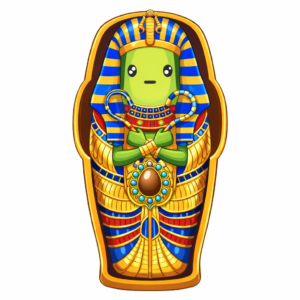
“Whoever disturbs the rest of King TutenCardo shall find every avocado they purchase either rock-hard or already brown.”
The warning was dismissed as superstition.
However, every member of the excavation team subsequently experienced disappointing supermarket avocados for the remainder of their lives.
Researchers now believe SphynxCardo may have guarded the secret entrance to King TutenCardo’s underground royal pantry.
CleoCardo: Queen of the Nile
No account of ancient Egyptian avocado history would be complete without CleoCardo, the legendary Queen of the Nile.
CleoCardo was celebrated throughout the ancient world for her beauty, intelligence, political skill and extraordinary ability to identify a ripe avocado from across a crowded marketplace.
She reportedly bathed in avocado oil, wore a ceremonial seed around her waist and served visiting dignitaries enormous bowls of royal guacamole.
Ancient scrolls claim that CleoCardo could command armies, negotiate with emperors and prepare twelve varieties of avocado toast before sunrise.
She was also famous for her dramatic entrance into the presence of powerful rulers.
Traditional historians say she was once carried into a palace concealed inside a rolled carpet. Avocado scholars argue that she originally considered arriving inside a paper bag with a banana, but feared she might ripen too quickly.
Anthony and CleoCardo: A Love for the Ages
The great love of CleoCardo’s life was Anthony, the celebrated Roman general who became completely captivated by the Queen of the Nile.
Anthony first fell in love with CleoCardo during a royal banquet after she served him a perfectly seasoned avocado filled with herbs, olive oil and lemon.
According to legend, he took one bite, looked deeply into her eyes and immediately forgot why Rome had sent him to Egypt.
Their romance became one of the greatest love stories of the ancient world.
Anthony showered CleoCardo with jewels, flowers and shipments of imported Roman sourdough. CleoCardo responded by teaching him the sacred Egyptian technique for removing an avocado seed without sending it flying across the room.
The couple hosted lavish feasts along the Nile, where guests dined on avocado boats, avocado salads, avocado soup and ceremonial guacamole served in golden bowls.
Their relationship caused great concern in Rome, where officials feared Anthony had become more loyal to CleoCardo’s avocado empire than to the Roman Senate.
They were correct.
The Secret Beneath the Plateau
Some researchers believe King TutenCardo ordered the construction of enormous underground chambers beneath Giza.
These chambers may have contained royal avocado orchards protected from the desert heat by a sophisticated system of stone refrigeration.
SphynxCardo may have been created to guard the entrance.
Other researchers believe the chambers were simply the world’s first walk-in pantry.
More controversial investigators suggest SphynxCardo was built by visitors from a distant planet called Avocadia.
They point to her flawless skin, perfect shape and total absence of bruising as evidence of agricultural technology far beyond anything available today.
Mainstream archaeologists have dismissed this theory as ridiculous, although several have admitted it would make an excellent documentary series.
The Great Preservation Mystery
Perhaps the greatest mystery is how SphynxCardo has remained green for thousands of years.
Scientists are examining several possibilities:
- An ancient coating of lemon juice
- Advanced pharaonic refrigeration
- A completely airtight underground chamber
- Divine protection from the Egyptian god of guacamole
- The earliest known use of reusable food-storage containers
The lemon-juice theory remains the leading explanation.
Researchers have warned that SphynxCardo must not be pressed until her exact ripeness has been established. Applying too much pressure could damage an irreplaceable archaeological treasure, while waiting too long might cause the entire monument to become brown and stringy.
A Discovery That Changes Everything
Although no reputable archaeological authority has officially confirmed the excavation of an enormous avocado Sphinx, tourism companies are already developing specialist SphynxCardo experiences.
Proposed attractions include pyramid-side guacamole classes, sunrise avocado meditation, visits to the golden sarcophagus of King TutenCardo and a romantic Nile cruise retracing the love story of Anthony and CleoCardo.
For now, the Great SphynxCardo remains beside the pyramids, gazing calmly across the desert with the quiet confidence of a creature that knows she contains fibre, potassium and absolutely no cholesterol.
Whether she proves to be an ancient monument, an artistic masterpiece or simply the greatest avocado story ever told, one thing is certain:
The history of the Giza Plateau will never be quite the same again.
Archaeological Disclaimer
This article is a work of avocado-inspired satire. No enormous avocado Sphinx has officially been excavated at Giza—at least not yet. SphynxCardo, King TutenCardo, CleoCardo and Anthony belong to the remarkable historical universe of The Avocado Cookbook. Any resemblance to actual pharaohs, queens, Roman generals or ancient guacamole ceremonies is entirely intentional—and entirely ridiculous.
Related posts:
Powered by YARPP.